Written by:
Hannah Baker
Senior Consultant
If you have joined any recent Literacy Tree training, you have probably heard us talk about our planning sequences as an approach rather than a scheme. This is really intentional. Our mission at Literacy Tree is simple: ‘To change children’s lives through literacy. To empower the teachers who make it happen.’ We believe empowering teachers means giving you the freedom to decide how to teach, not telling you exactly what to do.
Our planning sequences focus on strong teaching and sound pedagogical choices, not on following strict rules or scripts. They work best when adapted for each class based on context and need, rather than being treated as a ‘one size fits all’ approach. So, how can you get the most out of our planning sequences? We recommend seeing them as a strong, consistent framework for quality teaching of reading and writing, built around great books you can use, adapt and make your own too. Below are some suggestions to support your thinking:
Recommendation 1: Consider your point of access
All of our planning sequences are written with end-of-year expectations in mind. This means progression is always in view and, as a writing community, you are always moving towards those goals.
We do provide quality suggested curriculum maps on our website, for use if you are looking for a recommended order to implement straight away that makes strong thematic literary links across books. However, we are also keen for schools to know that they are able to move books around and consider how they fit into their wider curriculum journey too should they wish to do this. With that in mind, consider the point at which your class is engaging with a new planning sequence. Your approach in the Autumn Term may look very different from how you choose to use and apply it in the Summer Term, and the resources are designed to support you with this flexibility.
Is this the first time the children are exploring, for example, the idea of noun phrases? If so, you may wish to focus on the previous year group’s expectation given within the accompanying MAPS (mixed age planning suggestions) built within the sequence to ensure secure foundations for later learning. Our spiral curriculum ensures that children revisit objectives in different contexts over time, allowing knowledge to be reinforced and built upon.
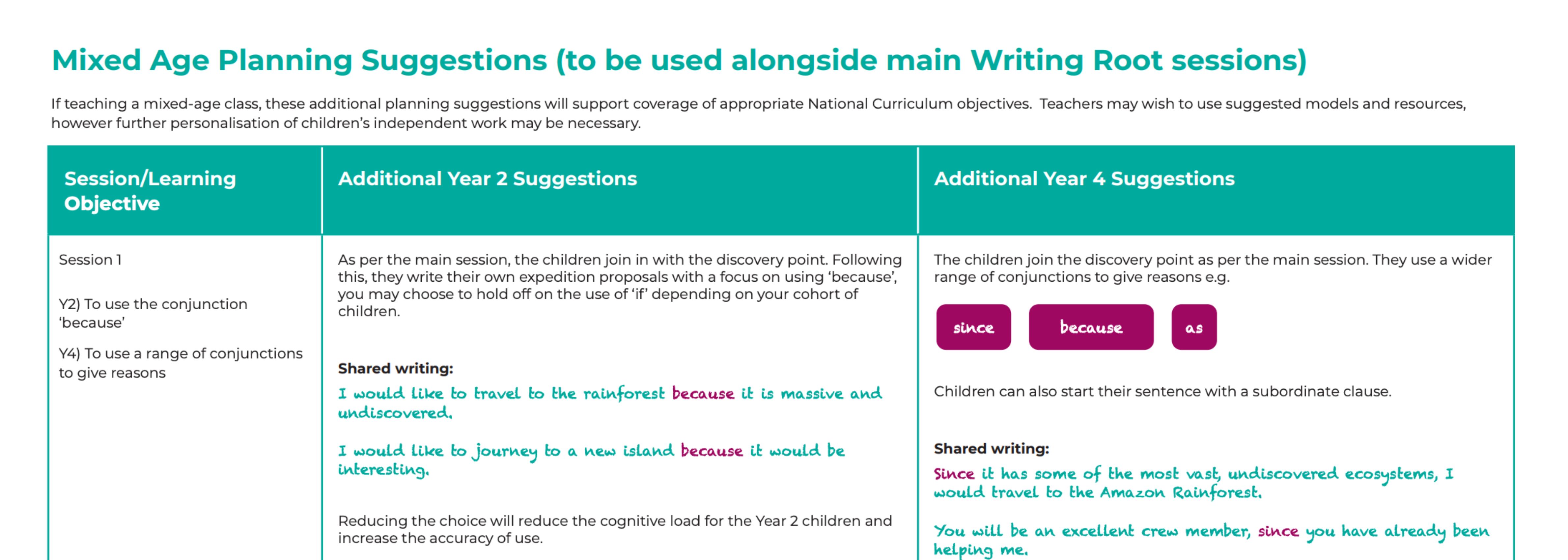
If children have already secured an objective outlined in a session, consider how you can deepen or extend their understanding. The sequence is not a script, but a springboard for high-quality teaching and learning at every stage.
Recommendation 2: Draw on your children’s prior knowledge
Prior knowledge helps children bring their own ideas and voices into their writing and supports motivation too. Choosing books thoughtfully for your context can help you tap into this brilliantly.
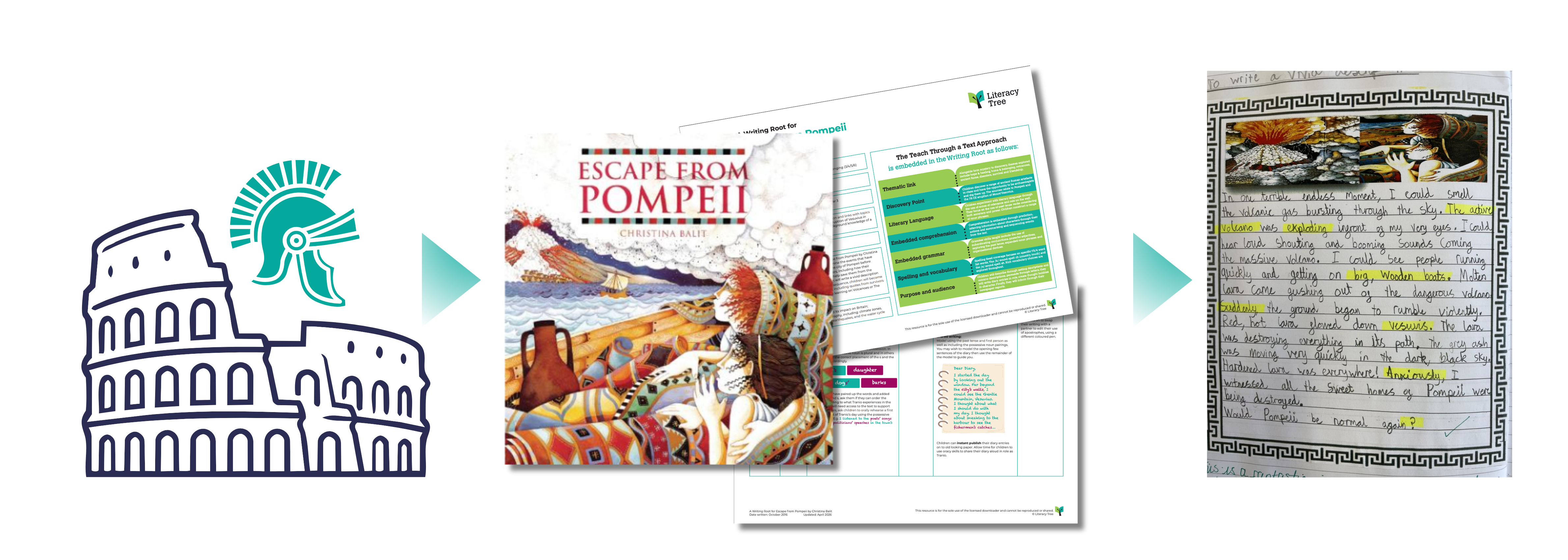
You might consider how a book connects with another area of the curriculum (being careful of course not to shoe-horn links for the sake of it and accidently dampening the power of making thematic links across books too). For example, when teaching Ancient Rome, you could explore our Escape from Pompeii sequence alongside it, or in the following half term. This can help children connect learning and enter the ‘bubble of the book’ with shared understanding.
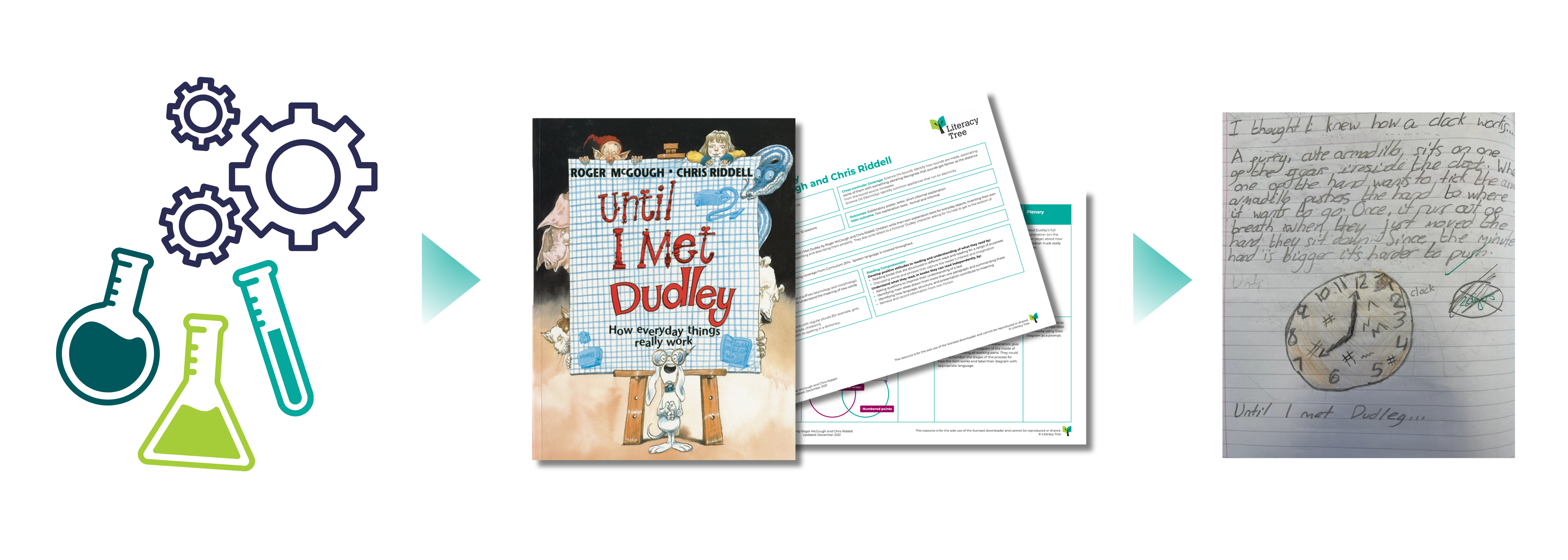
Similarly, if you are focusing on scientific explanation in science, you might pair this with the entertaining explanations found in the book Until I Met Dudley. These connections can help children build a clearer picture of English within the wider curriculum.
Working across year groups can also strengthen this progression. For example, if Year 5 are focusing on an extended journalistic outcome, consider when similar work was introduced in Year 4 and build on that prior learning to deepen understanding and motivation. Making links across books and outcomes, rather than seeing each book and outcome as separate from one another, builds depth and understanding in so many ways too.
Recommendation 3: Consider adapting outcomes based on children’s interests and needs
Each planning sequence is written with quality pedagogical strategies, ideas and approaches in mind. But we at Literacy Tree (as much as we would love to!) cannot know your children, what makes them tick, or what they might need a little more support with.
With this in mind, we encourage you to feel empowered to adapt sequences where appropriate so they can best serve your class.
Are you teaching the sequence for Ever-Changing Earth to a class of volcano enthusiasts, for example? You might choose to extend engagement by offering more choice in the Northern Lights explanation writing section of the sequence. There is also scope to extend shorter outcomes into longer pieces where children show strong interest and expertise.
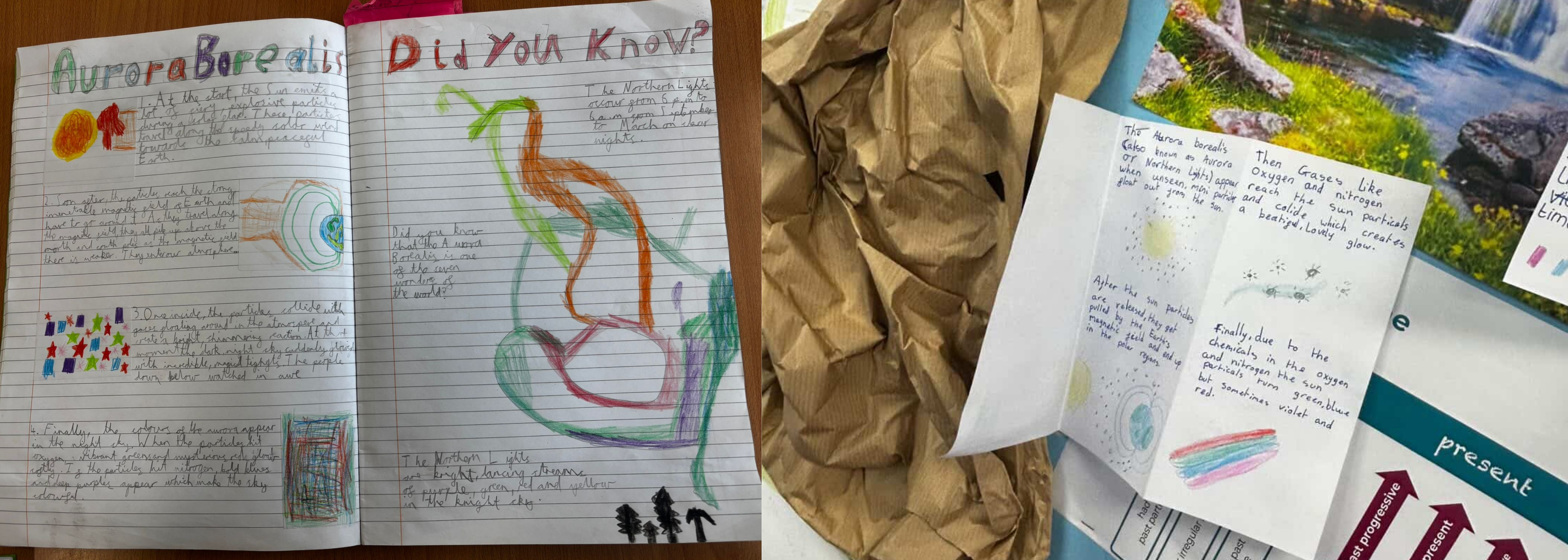
To get the most from our planning sequences, ask yourself: ‘How will this book and sequence speak to my children and their progress in writing?’
We’re here to support you throughout. If you are a member school, you have full access to all our online training and can book time with a team member via your platform dashboard. We are always happy to discuss adaptations or ideas you have with you to ensure the important principles of the approach remain intact whilst still meeting the needs of your learners. And please do keep in touch – we love seeing your pupils grow as writers and shine!