Why Handwriting Still Matters: The Freedom, the Focus, the Flourish
10th February 2026
Written by:

Claire Halstead
Consultant
When my son, Jack, was eight-years-old he announced, very matter-of-factly, that he had met his first girlfriend. When asked why Megan had caught his eye, his answer was immediate and sincere, “Because she has really beautiful handwriting.”
No mention of football skills. No talk of jokes or playground fun. Just the quiet power of carefully formed letters on a page. It was a small moment - but one that says something big about how children notice, value and respond to handwriting when we give it the attention it deserves.
When we talk about helping children become confident, joyful writers, the spotlight rightly settles on what they write - ideas, vocabulary, structure – while sometimes the mechanics of writing slips quietly into the background. But at Literacy Tree, we know that the physical act of handwriting isn’t a quaint extra: it’s a foundation for thinking, fluency and creative expression.
Recent developments - like the Department for Education’s Writing Framework - are beginning to reflect what many teachers have long understood: handwriting matters.
.png) |
Handwriting Frees the Mind for Thinking
Imagine a child brimming with ideas, poised with pen in hand, ready to write, only to pause every few words to work out how to form a letter. For many young writers, this is the reality. The cognitive load is heavy: letter formation, spacing, directionality and grip all compete with storytelling, vocabulary choices and sentence construction.
Research shows that when handwriting becomes automatic, it significantly reduces this cognitive burden. The brain is freed to focus on meaning rather than mechanics. The DfE Writing Framework makes this explicit, placing transcription at the core of early writing so that children can devote their mental energy to composition as they grow.
A growing body of research shows how handwriting supports embodied cognition. Writing by hand activates motor memory, visual processing and sensory feedback in ways that deepen learning. Children remember more, process ideas more thoroughly and make stronger connections when they write by hand than when they type – particularly in the early years.
Handwriting as an Art Form
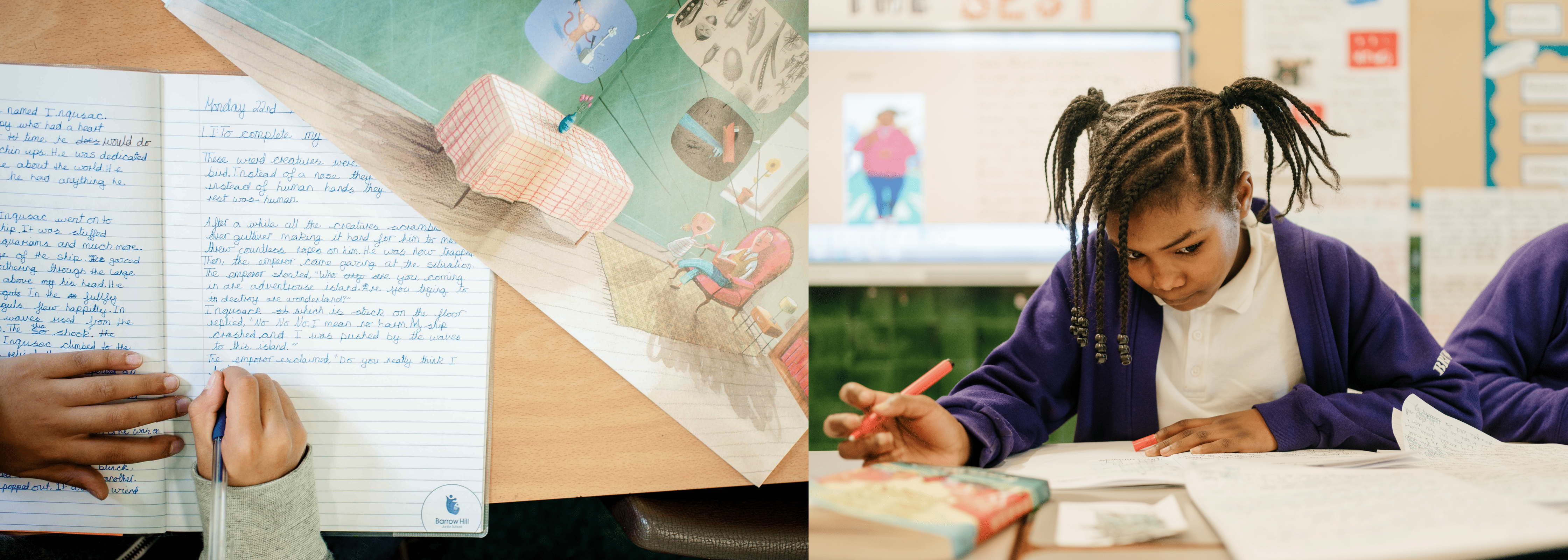
Jack didn’t describe Megan’s handwriting as neat or accurate. He said it was beautiful. And that matters. Handwriting is more than legibility – it is a craft. It carries rhythm, personality and intention. When children learn to form letters with care, they are learning an art form that blends precision with expression. My recent visit to Japan gave me the opportunity to see Japanese calligraphy in action – it can only be described as artful communication.
Research consistently shows that children produce longer, richer and more thoughtful writing by hand than on a keyboard. The pace of handwriting encourages reflection, while the physical act of forming letters reinforces spelling patterns and word structures. Handwriting doesn’t slow thinking down, it gives it shape.
There’s also what we as Teachers know to be the “presentation effect”. Clear, fluent handwriting changes how writing is received. Like it or not, Teachers respond differently to work that is well presented, and children internalise that feedback. Pride grows. Confidence follows.
 |
The DfE Writing Framework: Handwriting focussed
The DfE Writing Framework places handwriting firmly where it belongs: at the heart of writing development from Reception onwards. It emphasises:
· explicit teaching of letter formation
· clear progression and consistency
· modelling and practice
· the use of dictation to support transcription without overloading working memory
The importance of developing a strong core to support handwriting is explored here in more detail by our colleague Jess.
Whilst we at Literacy Tree do not affiliate ourselves with any particular handwriting scheme, we believe that developing these skills should be a whole school approach. It’s not about nostalgia or a resistance to technology; it’s about ensuring children have the physical and cognitive tools they need to become fluent writers before expecting them to express complex ideas. Having been in schools this week I know how hard Teachers are working to teach the composition of writing, but don’t we owe it to our children to ensure that they can communicate legibly too?
Moderation: achieving EXS
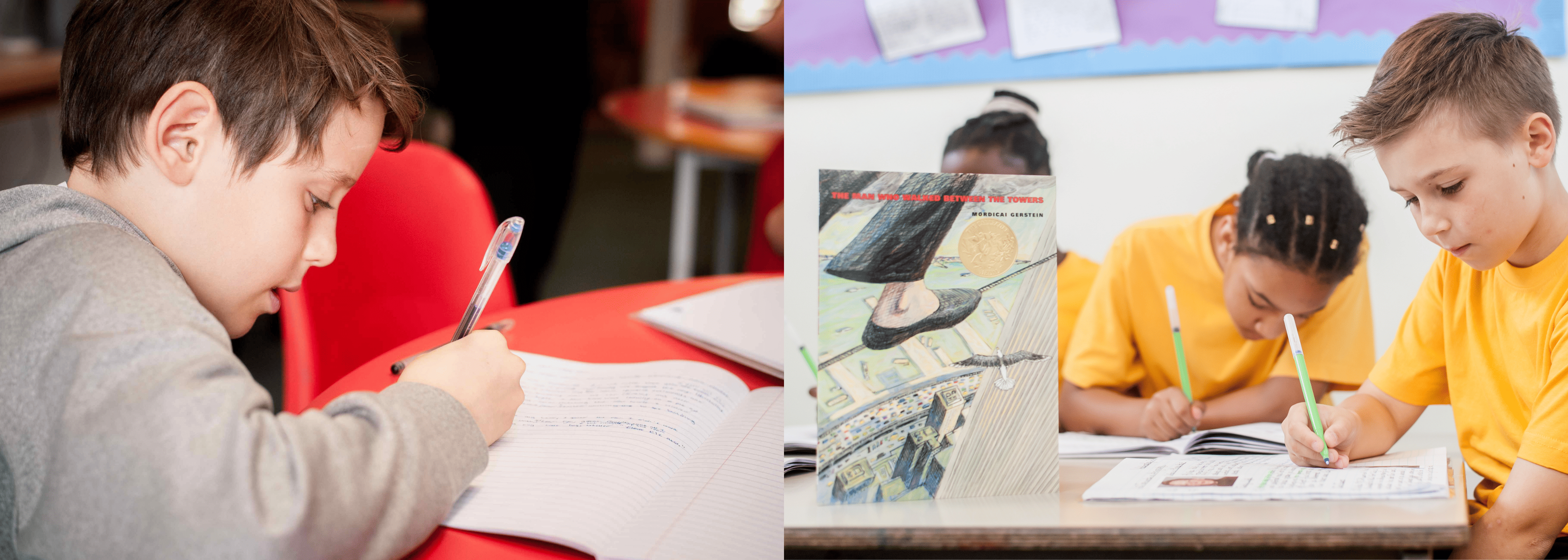
Writing legibly is particularly significant when we consider Year 6 moderation and the expectations around achieving EXS in writing. Moderation guidance is clear: pupils must demonstrate joined, legible handwriting that is maintained across independent writing. Too often, children with strong ideas and secure composition fall short, not because they cannot write well, but because handwriting fluency hasn’t been fully embedded. Joined handwriting is not an aesthetic add-on at this stage; it is a practical marker of automaticity. When joining is secure, it signals that transcription is no longer dominating cognitive effort, allowing pupils to sustain quality, control and stamina across longer pieces of writing - exactly what moderators are looking for.
 |
A Final Thought
In a digital world, it can be tempting to see handwriting as something children will “pick up along the way.” But moments like Jack’s remind us that handwriting still carries weight, meaning and power - socially, cognitively and emotionally.
When handwriting becomes automatic, children gain freedom.
When it becomes confident, they gain pride.
And when it becomes fluent, they gain a voice.
At Literacy Tree, we believe handwriting isn’t just preparation for writing. It is writing - and it’s worth getting right.