Why we are unapologetic about LGBTQIA+ Representation and Inclusion
4th December 2025
Written by:
Anthony Legon
Co-CEO & Co-Founder
You’ll have probably heard us talking about inclusion, representation and diversity before. That’s no coincidence – it’s something incredibly close to our hearts at Literacy Tree. To support with this, we run three representation panels that meet termly. These are core to our approach and form a central tenet in our work around representation, diversity and inclusion. On the surface the three panels all do something very similar:
- They bring together the authentic voices of experts in the different communities they serve
- They share the belief that all children deserve to be seen and see into the lives of others
- They reflect and steer book choices whilst feeding back and offering advice on content and guidance
There’s one key difference however between our Race & Cultures, SEND & Neurodivergence and our LGBTQIA+ panels. And that’s the ongoing struggle: the struggle to ensure Queer Literature is represented in our primary schools; the struggle to continuously have to justify why this is important; the struggle to keep up with the politicisation of the community and the debate around our existence.
Sadly, every time the LGBTQIA+ panel meets the first point on our agenda is to discuss the latest feedback from one school or another. To be clear, this is almost never the school’s fault, but usually following feedback/pushback from one of the following: governors, parents, the diocese, the faith, the school community. Even more sadly is that in most of these cases it is a lone voice – but a voice nonetheless that shouts louder than any other. We’re not homophobic but… protecting our children isn’t transphobic… our children aren’t mature enough to understand… this is pushing is an ideology.
The objective (and, for some, perhaps uncomfortable) truth is that queer adults grew from queer children. Not a phase. Not a choice. Not because of influence. Ask any adult from the queer community and they’ll tell you. But therein lies the problem: the community are barely ever consulted in these conversations – they happen around us not with us. The ongoing question we are forced to ask it what exactly do you think you’re protecting children from? If it’s protecting them from growing up to be part of the queer community then that’s queerphobic. If it’s to protect them from ‘grooming’ then that’s queerphobic. If it’s to protect their ‘innocence’ then I’ve got inconvenient news: that’s also queerphobic. Queer people exist. Your children will meet them - and they’ll be lucky to have them as part of their rich community of friends, peers, teachers and family.
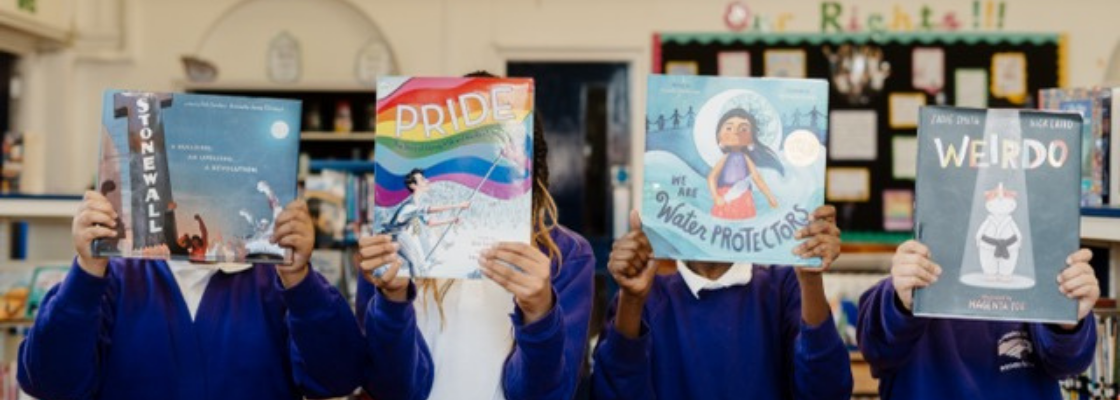
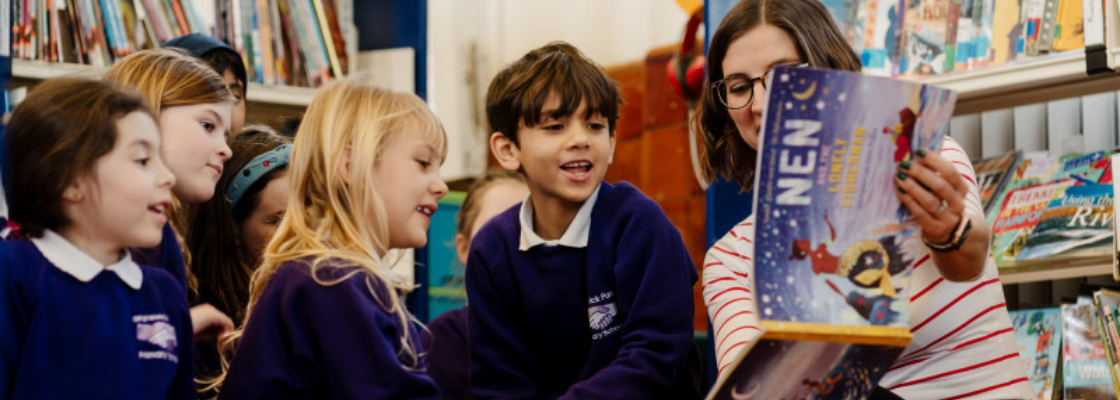
Protecting innocence always smacks of being a bold claim. Turn on any children’s film; open the vast majority of children’s books; or watch every episode of any soap. In fact, most narratives in most cultures depict straight relationships as a normalised, acceptable and necessary part of the infant experience. If we’re protecting innocence by not educating, exposing and immersing children in the idea of queer love then logic would suggest we must also ‘protect’ them from the everyday, heterocentric, heteronormative, hetero-well-everything culture we present to them without batting an eyelid. If we’re saying that the innocent story of a merman falling in love with a lonely fisherman is sexualising children, then so is the story of a boy from the town of Zennor falling for a mythical mermaid. If the story of two male penguins raising a baby penguin in Central Park wrong, then, unfortunately, so is the beautiful, diverse family represented in So Much. If the story of a boy wanting to dress as a mermaid is inappropriate then so is the story of the story of Halibut Jackson dressing in a flowery suit to visit the park. The alternative – not protecting, not preserving, not preventing, the ‘indoctrination’ is just taking a different form.
If we don’t expose children to a broad, wide-ranging and diverse diet of literature then the result is that we’re not just limiting them from being immersed in some of our very best literature, we are consciously creating a culture where we’re teaching them that: same-sex bad, opposite-sex good, where wanting to explore, experiment and – well – exist is discouraged. The generation who grew up through and were educated within Thatcher’s Section 28, will undoubtedly assure you that it leaves a lasting, negative and pervasive legacy.
So what is the legal position and where do we stand? Is censorship a thing now, or can we push back against parents and dismiss the diocese?
What the law and official guidance allows and encourages
- Under the statutory framework for schools in England, all primary schools are required to teach Relationships Education.
- Within that, they are permitted – and, in fact, strongly encouraged – to include content about different kinds of families, including those with same-sex parents.
- As part of this, primary schools can draw on books or teaching materials that reflect LGBTQIA+ identities – for instance, featuring same-sex parents, same-sex relationships, or demonstrating diverse gender/sexual identities – as part of broadening children’s awareness of the different kinds of families and relationships that exist. Such inclusion aligns with guidance advocating age-appropriate, respectful teaching on diversity.
- Official guidance also emphasises that any LGBT-inclusive teaching should be sensitive and age-appropriate and fully integrated into the curriculum rather than being delivered as a one-off, isolated lesson.
In practice, this means that many primary schools do have the discretion to include LGBTQIA+-themed books in reading time, in class lessons, or as part of discussions on families, relationships, respect, and diversity, and such inclusion is considered legitimate.
What is not mandatory – and where discretion lies
- Unfortunately, the inclusion of explicitly LGBTQIA+-themed content (or books) in primary school curriculums isn’t compulsory. While the guidance strongly encourages coverage of different family types (including same-sex families), it doesn’t impose a binding requirement on all primary schools to teach about LGBTQIA+ issues.
- Because of this, schools do have the choice not to include LGBTQIA+ books or content, or may include only minimal reference (e.g., mention of same-sex parents when discussing family structure) rather than broader aspects of sexual orientation or gender identity and embedding this within the curriculum.
- If a school does opt to teach beyond the basics, especially on more sensitive topics (e.g., sexual relationships), there is an expectation of parental engagement: schools should publish their policy online, share the intended resources (e.g., books), and allow parents insight into what will be taught.
- However, parental consultation does not amount to a parental veto and that’s crucial here. That means even if some parents object, that does not legally oblige a school to omit LGBTQIA+ content.
- Hence, the ultimate decision about whether to include LGBTQIA+ books or wider content remains with individual schools, within the framework of official guidance.
What this means for teaching LGBTQIA+ books in practice in primary schools
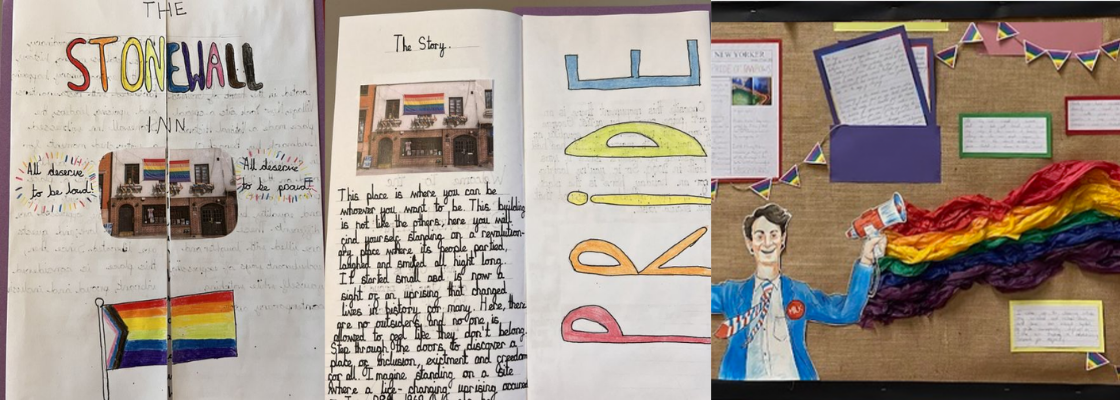
- A primary school in England can include LGBTQIA+ children’s books – for example, books depicting same-sex parents, same-sex friendships, diverse identities – as part of its reading list, class discussions, or integrated curriculum.
- Whether it does so depends on the school’s leadership, its view of what is age-appropriate, its understanding of community sensitivities (religious, cultural, or otherwise), and willingness to engage with parents and comply with equality and safeguarding laws.
- For parents or carers concerned about whether such books are used in their child’s school, guidance requires that schools publish their Relationships Education policy and make resource examples available – meaning they should be able to find out which books or materials are being used.
- For educators or advocates, there is scope to use existing resources (guides, lesson plans, inclusive-curriculum materials) to gently incorporate LGBTQIA+ representation, illustrating diverse families and relationships in ways accessible to young children, while respecting age-appropriateness and inclusivity.
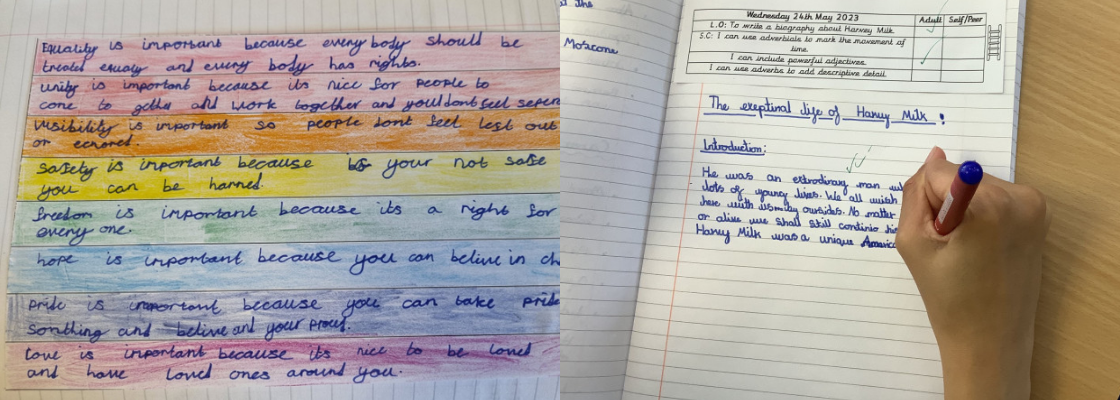
To put this in some context, a 2024 report by Diversity Role Models found that 86% of staff and leadership respondents claimed their school delivered a diverse curriculum including LGBT+, race, religion, disability and gender-equality content. However when pupils were asked, only 41% of primary pupils said LGBT+ topics were taught regularly at their school, and 37% said they didn’t know whether that was the case. This suggests a substantial gap between staff beliefs or intentions and pupils’ lived experience of inclusive teaching.
In the end, our stance is simple: we refuse to shrink LGBTQIA+ lives to a footnote when they are, and always have been, a central part of the story. At Literacy Tree, we won’t apologise for giving children the mirrors and windows they deserve, nor will we dilute the richness of literature to appease the loudest objections. True inclusion isn’t a gesture; it’s a commitment to truth, compassion and representation that spans every year group, every classroom and every child. Our job, and our responsibility, is to prepare young people for the world as it is, not as some wish it to be. In that world, queer people exist, thrive and contribute immeasurably. Our curriculum should – and can – reflect nothing less.
To read more around statuary guidance, please see here.