Written by:
Lynn Sear
Co-CEO & Co-Founder
In classrooms shaped by the Literacy Tree approach, every choice we make, from the books we select to the way we model writing is deliberate and rooted in pedagogy. One choice that often surprises teachers new to our approach and during Inset is our use of flip charts and pen rather than prepared presentations during writing lessons.
So why do we favour such a traditional, low-tech approach in an age of interactive whiteboards?
Let’s break it down.
Writing Live Mirrors the Writing Process
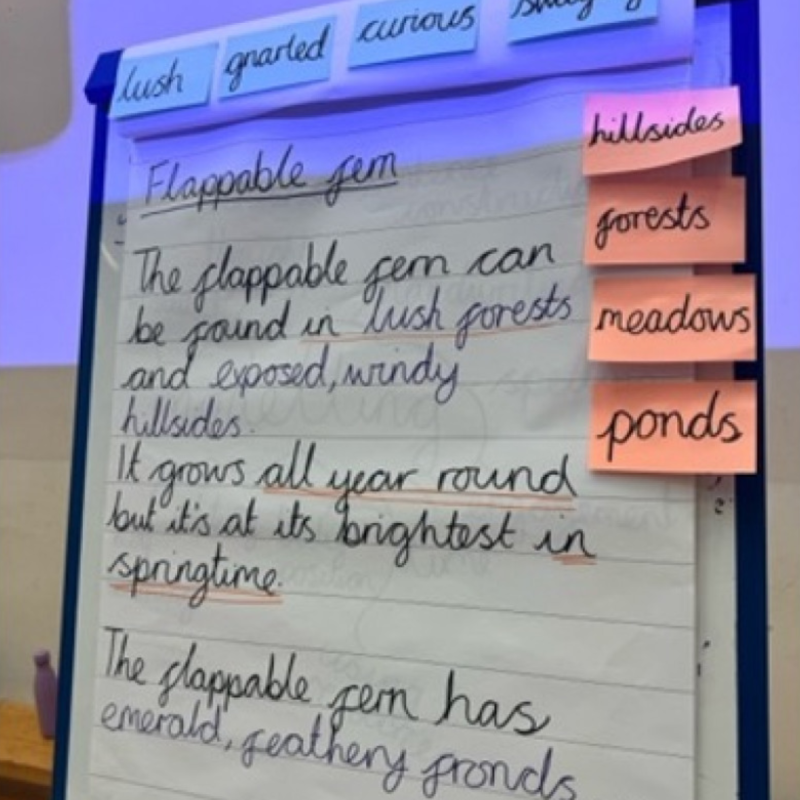
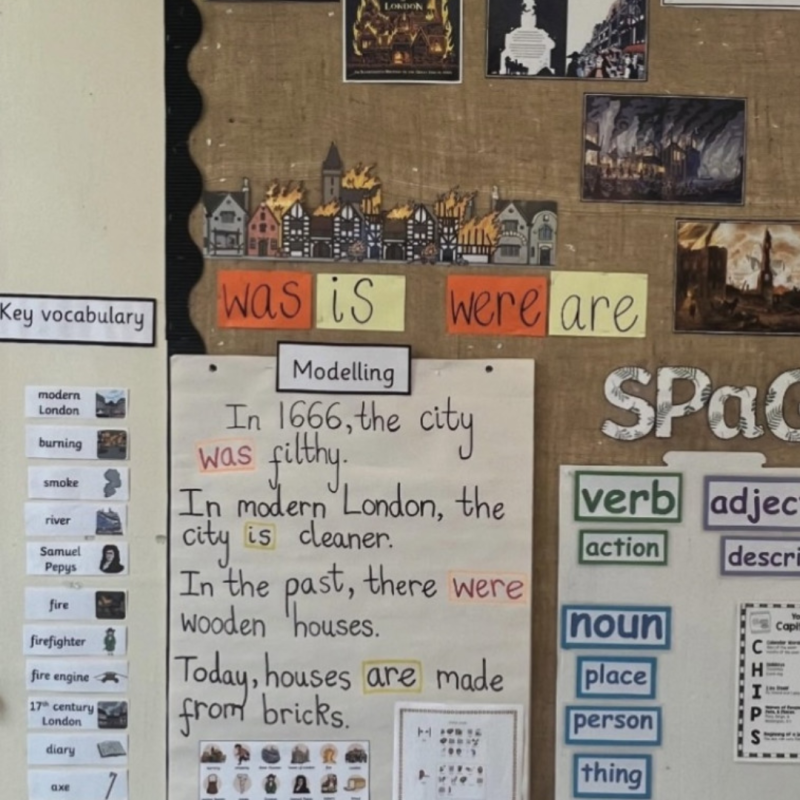
When we write by hand on a flip chart in front of the class, we’re not just modelling what good writing looks like, we’re modelling how it’s created. Children see us:
- Pausing to think
- Revising and editing as we go
- Striking through and improving words
- Dotting underneath spellings we try out in front of children therefore modelling spelling strategies from Spelling Seeds
- Talking through vocabulary choices aloud referring to Vocabulary Vines
- Celebrating when something sounds just right
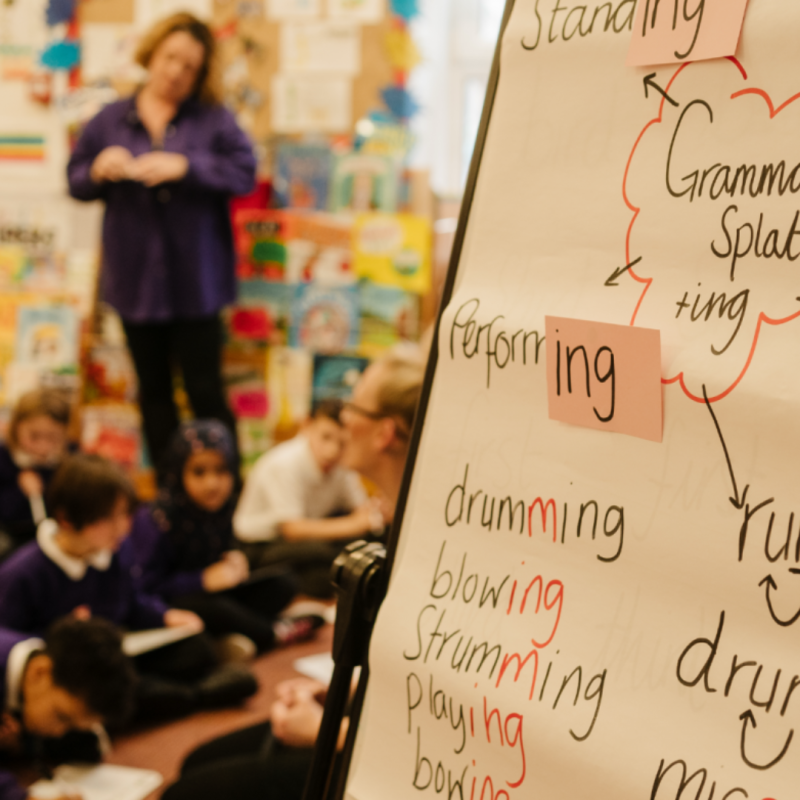
- Using Working Walls to feed into writing
This real-time, imperfect, living version of writing makes the process visible and accessible. It shows children that writing doesn’t arrive fully formed, it’s built, rebuilt, and refined. A PowerPoint, even with animations, can’t replicate this sense of authenticity our children need to see themselves as writers.

Visibility and Engagement
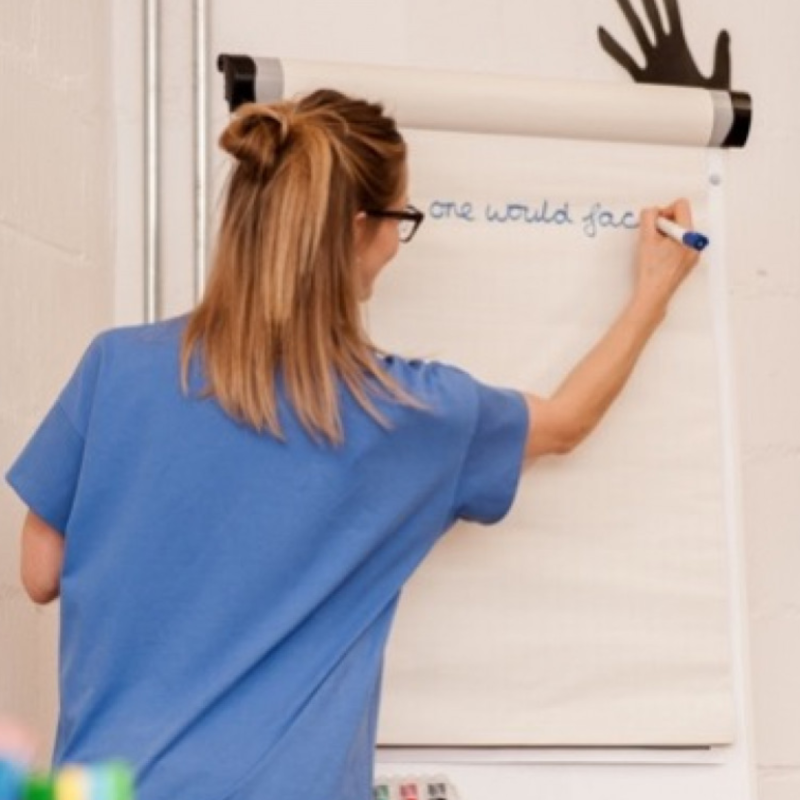
With a flip chart, the physical act of writing is more visible. Children track our hand movements, read along as we write, and connect more directly with the content. There’s something quietly powerful about watching words grow on a page, line by line.
It also slows the pace. Prepared slides can move too quickly as children are presented with polished text, and often miss the steps it took to get there. With pen and paper, children have time to process, discuss, and contribute. They also see the physicality of writing happening in real-time and see how thinking aloud happening.
Cognitive Load: Less Tech, More Thinking
The Writing Framework published last week recognises how cognitively demanding writing is. PowerPoints can unintentionally increase cognitive load. Fonts, transitions, and formatted text and while visually appealing this can become a distraction, especially for younger learners or those who struggle with attention. A flip chart, by contrast, is uncluttered. It’s raw. It’s focused.
And in writing, focus is everything.
Collaboration and Flexibility
Fits with Literacy Tree’s Pedagogy
In Summary: Why the Flip Chart Wins
- It shows writing as a process, not a product
- It engages children physically and cognitively
- It allows for spontaneity and collaborative authorship
- It reduces distractions and builds focus
- It aligns with Literacy Tree’s emphasis on authentic, thoughtful, and inclusive writing
So while technology certainly has its place in the classroom, when it comes to modelling writing, sometimes the best tool is the simplest one: a flip chart, a pen, and a room full of curious minds ready to write.
