Written by:
Alice Wood
Marketing & Comms Coordinator
History does not exist as a static or objective truth. It is a living, breathing, malleable and evolving narrative. Women’s History Month offers a moment to pause and reflect on how we perceive the past. It invites us to ask important questions: Who documented the past? What were their motivations? And where are the women in all of this?
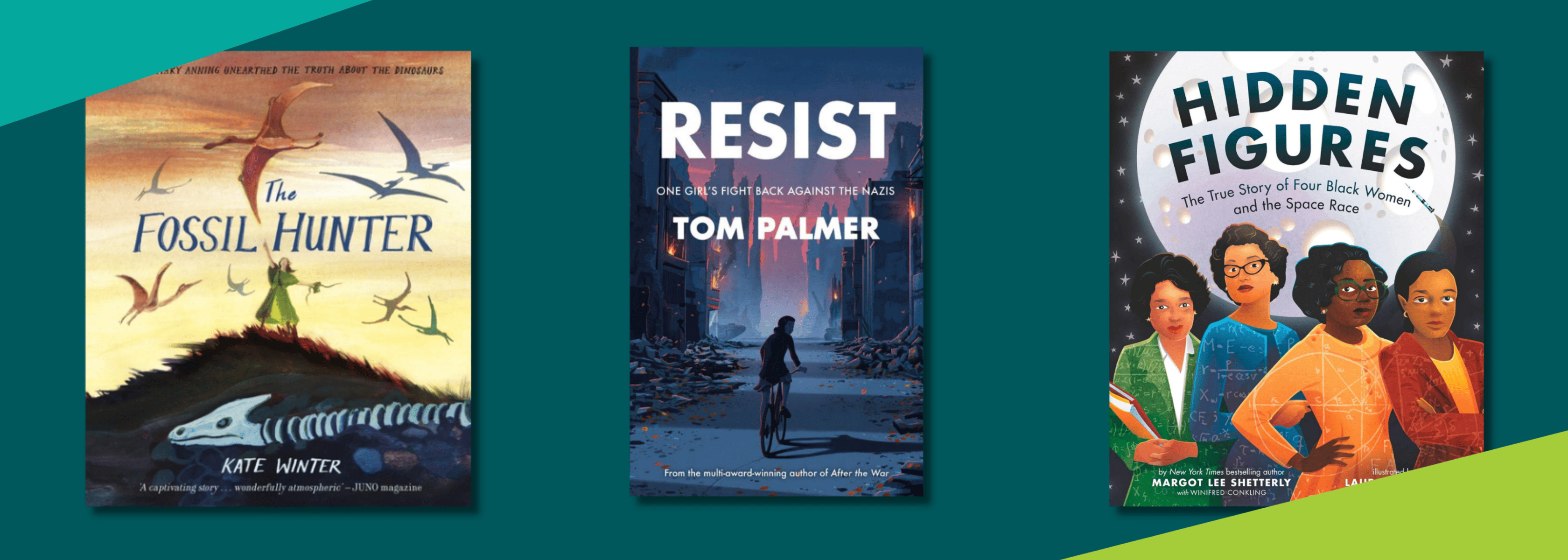
Many children’s authors today are asking these questions and engaging in acts of corrective and revisionist historiography - uncovering untold stories and making them accessible to young readers. The Fossil Hunter brings the pioneering palaeontology of Mary Anning to life. Resist explores the little-known story of 15-year-old Audrey Hepburn’s role in the Dutch resistance, where she served as a secret courier of underground newspapers. Hidden Figures highlights the extraordinary contributions of Black mathematicians such as Katherine Johnson, Dorothy Vaughan, and Mary Jackson during the Cold War space race.
We want to champion as many of these books as possible, weaving them into the curriculum not just this month but throughout the year. Why? Because it is important that all children understand themselves as participants in history, not simply observers of it. To ensure girls can see themselves in this role - as change-makers and history-shapers - we need to expose them to the stories of women who have already made their mark. This isn’t always easy when these marks have been relegated to the footnotes or even actively concealed. But when we successfully locate and bring stories of women’s history into our classrooms as teaching texts, we are not only gifting children a more complete picture of the past; we are expanding their sense of what is possible in the present.
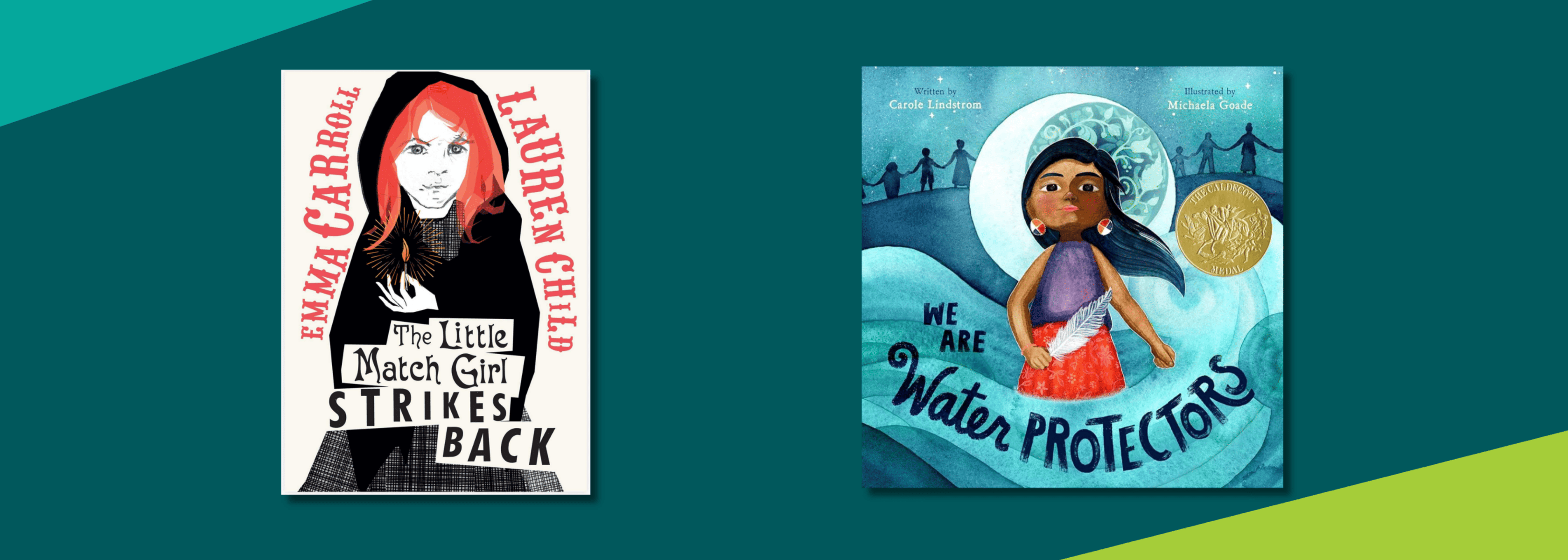
One book from the Literacy Tree shelf that beautifully exemplifies this connection between past and present is We Are Water Protectors. It is a story about looking backwards in order to look forward. In Ojibwe culture, women are the protectors of water, and the women ancestors depicted in the text and illustrations appear as respected figures within the community – storytellers and guardians. In the present day, the young female protagonist is filled with energy and resolve: “I must rally my people together.” She stands on the shoulders of those who came before her, continuing a long lineage of water stewardship. She carries her Indigenous ancestors’ purpose into the present through her own activism against oil pipelines: the modern incarnation of the venomous black snake in an Indigenous prophecy.
Another story from our shelf that places women’s agency and activism front and centre is The Little Matchstick Girl, a retelling of Hans Christian Andersen’s Victorian classic. The original tale invites sympathy for a girl who lives - and ultimately dies - in extreme poverty. But in Emma Carroll’s retelling, we feel not only sympathy, but admiration for our protagonist Bridie, who is spirited and defiant... and survives! The story is inspired by the Bryant and May matchstick factory in London, which employed thousands of women and girls who were paid poorly and exposed to serious health risks. When a worker was unfairly dismissed in 1888, her peers went on strike. Activist Annie Besant learned about the dispute and helped bring public attention to it, raising awareness through newspapers and campaigning for better conditions. The strike eventually led to improvements in working conditions. Here, women came together in solidarity and used their collective strength - whether through the withdrawal of labour or the power of the pen - to demand change.
By showing girls that women have always been active participants in history, we remind them of the strength and ingenuity of those who came before them. We show that they, too, can build upon this legacy, speaking out and demanding change wherever they see injustice.
At Literacy Tree, we have a responsibility to platform women’s history through our book choices. Yet this work must also be guided by intersectionality, because women’s history is not a monolith. Gender, race, class, and (dis)ability interact to shape different experiences and perspectives. As more authors and illustrators illuminate the lives and legacies of remarkable women from all walks of life, we will continue to champion their work and carve out space for these stories in our resource offer - especially where we identify gaps. Because when teachers have access to these texts and resources, they can create classrooms where every child sees themself as part of history in motion.