Written by:

Team Literacy Tree
Welcome to the third instalment in our myth-busting series. Last time, we debunked three pervasive beliefs surrounding primary literacy, and are back today to tackle three more… let’s dive straight in!
Myth: Play has no place in Key Stage Two literacy
Truth:
Play is foundational to literacy development and engagement, even as children get older.
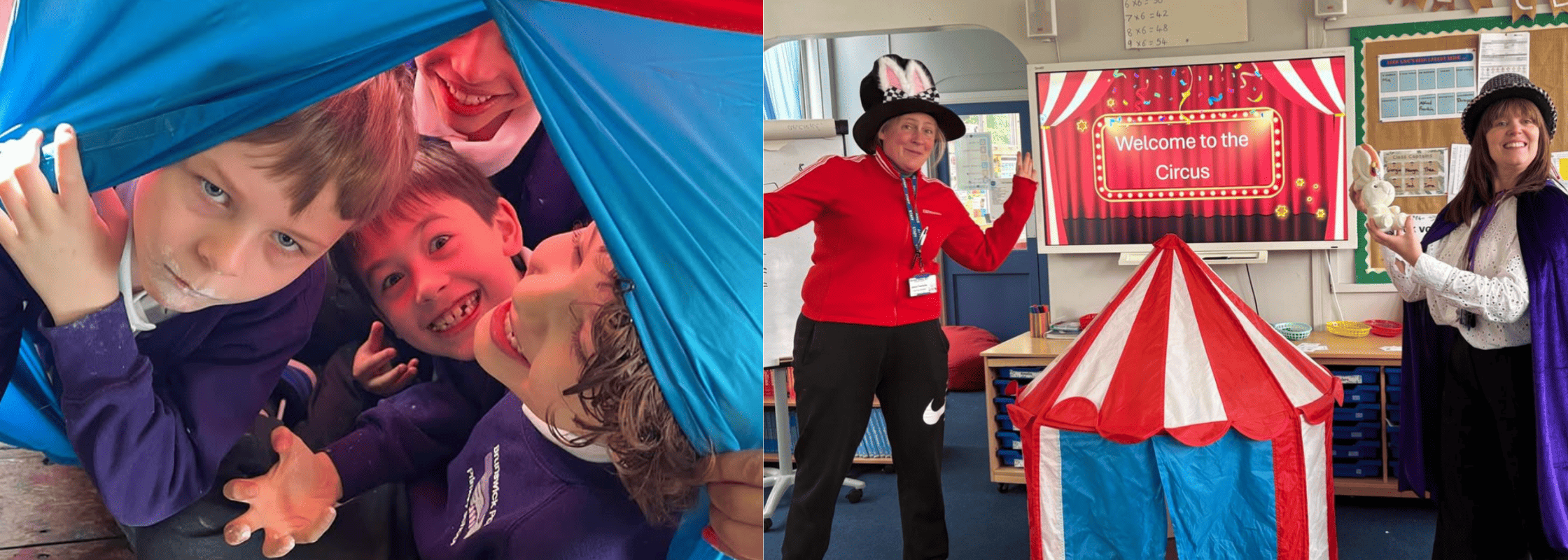 |
We often celebrate play in EYFS, where it’s recognised as essential for developing language, social skills and problem-solving. Role-play corners and hands-on exploration give young learners a safe space to make sense of the world around them. But the need for this experimentation doesn’t disappear as children get older – what changes is the way play could look. In upper-primary classrooms, imaginative exploration can take the form of conscience alleys, writing in role, or creating freeze frames. Extending play into older age groups continues to support critical thinking, communication, and social-emotional skills, while also keeping engagement high.
Playful exploration transforms reading and writing from a chore into an adventure, giving learners the space to truly inhabit the stories they encounter. Immersive experiences reinforce comprehension because they require children to actively engage with the text. When pupils step into a character’s shoes or act out a scene, they have to think carefully about what is happening and why it is happening. This deepens their empathy and understanding of the plot and themes. It also encourages them to infer meaning and justify ideas using evidence from the text. By experiencing the story in this active way, pupils are more likely to retain key details and develop a richer understanding of what they have read.
Play is also a brilliant way to secure ‘buy-in’ from children at the start of a new book. Transforming the classroom overnight or delivering a mysterious letter sets the tone for a memorable English unit - whether in Reception or Year 6. Teaching texts need to have the scope to deliver on National Curriculum objectives, but they also need to be stories that children genuinely enjoy. By creating positive memories of play around the books, we build lasting associations with reading, helping children see it as something fun. As children move up the school and become independent readers, it’s important to keep reminding them of the power of books to transport. When they’re having fun with stories in the classroom, they’re far more likely to pick one up in their own time, so we should never shut down opportunities to expand imagination beyond the exercise book.
How we can help:
Our resources turn books into teaching texts – but we design them so children feel like they’re exploring stories, not sitting in a lesson.
All of our Writing Roots open with a discovery point to immerse children in the world of the text from the very beginning. In Leon and the Place Between (Year 3), the classroom is transformed into a circus setting, complete with a pop-up tent, popcorn, and the teacher in role as ringmaster. In The Tempest (Year 5), children arrive to the teacher calling out “all aboard!”, and a storm is conjured through video and sound. In Boy in the Tower (Year 6), pupils walk into a classroom overtaken by triffid-like plants, immediately sparking anticipation.
These moments are designed to hook children in – to make them pause, wonder, and ask questions. Before a single page is turned, they are already thinking, predicting, and engaging with the narrative. It’s this sense of immersion that transforms reading from something they have to do into something they want to explore. However, play doesn’t just appear at the start of a Writing Root – it's woven throughout. Writing itself can be inherently playful, particularly when children are writing in role with a clear sense of audience and purpose. Or when other forms of creativity are harnessed - this might look like pupils moulding their own plasticine plants inspired by The Wilderness and writing labels to describe their unusual creations. Alongside this, dramatic conventions – such as conscience alleys, freeze frames, and role-play – are embedded throughout sequences, giving children repeated opportunities to deepen their understanding through play.
Myth: Talking is a distraction from real, focused learning
Truth:
Purposeful oracy opportunities support confident comprehension and written communication.
 |
Before a child can write it, they need to say it. Before they can understand it, they need to discuss it. In this way, spoken language is the foundation on which reading and writing are built. Through talk, children rehearse ideas, test out vocabulary, and begin to organise their thoughts.
Oracy is key to vocabulary development. Children learn new words most effectively when they hear them used in context and have opportunities to use them themselves. By encouraging pupils to speak in full sentences, experiment with new vocabulary, and build on the ideas of others, we help them to internalise language in a meaningful way. This, in turn, has a direct impact on the quality of their writing and their ability to comprehend increasingly complex texts.
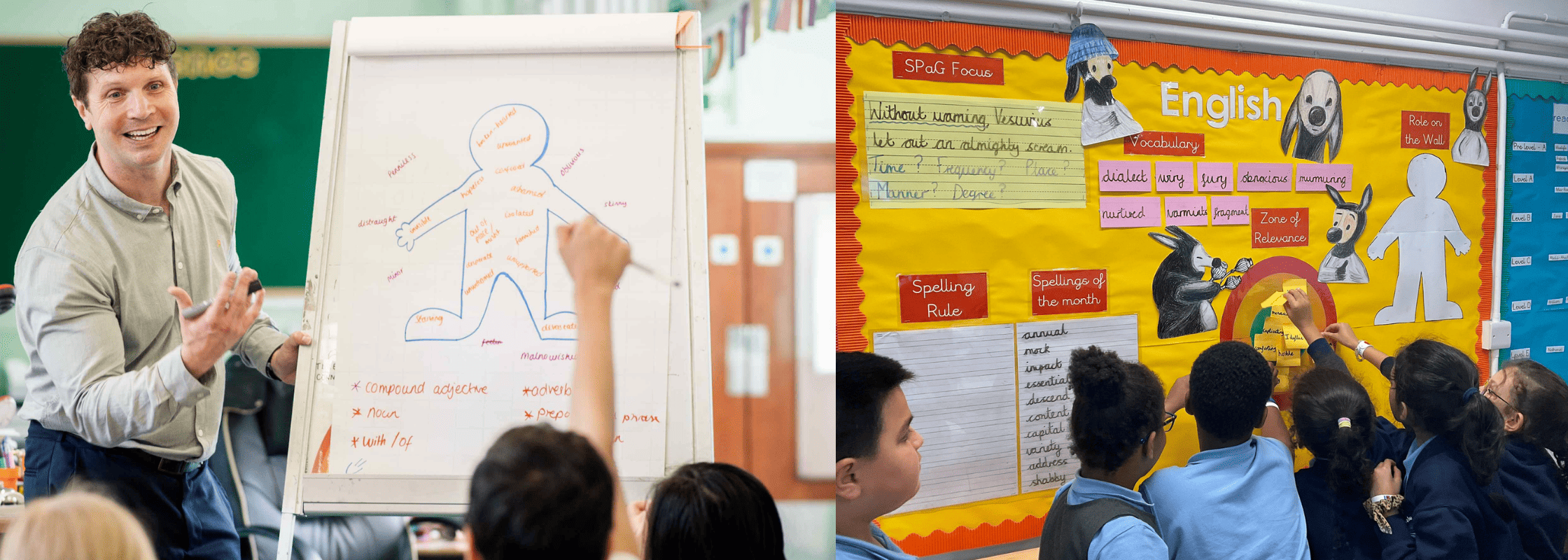
Teacher modelling plays a crucial role here too. When teachers use a flipchart or working wall to model writing, narrating their thinking out loud, they make the invisible visible. By verbalising choices they show pupils what the writing process actually looks like. Hearing this internal dialogue helps children to understand writing as a process of drafting, refining, and improving. It also gives them the language they need to talk about their own writing: “I need a capital letter here because it’s a proper noun,” “That sentence doesn’t sound quite right – let me read it back,” “Can I replace this adjective with something more precise?” “I’ve used ‘said’ twice – what could I use instead?”
By valuing talk as an essential part of learning, we help children to become confident communicators, able to express their ideas, engage with others, and approach reading and writing with greater confidence.
How we can help:
At Literacy Tree, exploratory talk, dialogic teaching, and the use of spoken language are central pedagogies. We use high-quality literature as a springboard for reading and writing, creating rich opportunities for discussion that allow children to explore themes, characters, and plots thoughtfully. This approach also enables pupils to examine the linguistic and grammatical choices authors make for impact, and to consider how they might apply tools from their own ‘writer toolkits’ to enhance their writing.
Questions and discussion prompts appear throughout our materials to guide meaningful dialogue, helping children to express their thoughts, listen to others, and interact critically and constructively. Our Writing Roots and Reading Leaves include vocabulary-focused resources, such as the Zone of Relevance and Shades of Meaning paired or group activities, which actively engage children in discussions about word choices, purpose, and effect, deepening their linguistic understanding.
Reception and Year 1 resources focus on quality exploratory discussions and understanding how sentences work together for clarity and meaning. As children progress through the school, they have increasing opportunities to develop speech, debate, and confident verbal reasoning.
Our Vocabulary Vines are a sister resource to our Writing Roots, and they provide structured opportunities for children to develop their understanding of language through short oral tasks – all within the familiar context of a text they are already studying.
Our Reading Leaves are also founded on talk. They prioritise rich discussion and collaborative tasks that support enjoyment and shared understanding of the text.
Myth: Reading and grammar should come first, writing second
Truth:
Writing isn’t just a product, It’s a powerful learning tool.
.png) |
Writing is often treated as the product of learning – something children do only after they have read the text, learned the relevant grammar rules, and absorbed new vocabulary. In reality, writing needs to be viewed as a tool for learning and a process to be experienced rather than a product to be created.
Prioritising frequent, purposeful practice opportunities ensures that children are engaging with writing as an every-day process. Over time, these low-stakes experiences build fluency and flair, ultimately making longer writing tasks far more accessible – and enjoyable! Each short task becomes a steppingstone towards extended writes, compounding learning in the moment so that it becomes muscle memory.
A working wall can support this process beautifully. Flipchart shared writes, sentence strips, thinking frames such as Zones of Relevance and examples of short independent tasks can be collected in one place for pupils to reference later on. Regularly adding to this wall creates a sense of cumulative learning, as it fills up over the course of several weeks.
There is also real power in pausing to write partway through a story – exactly when the narrative presents a purposeful opportunity. Children might write an S.O.S message at the moment a character finds themselves in trouble, or a letter of advice to our protagonist when they have a dilemma. These immediate, contextual writing tasks give writing purpose and reinforce comprehension.
How we can help:
In our Writing Roots, we don’t expect all the reading to be completed before writing begins. Often, we ask teachers to “read up to page…” before pausing for a writing task that feels relevant to that moment.
Our resources include plenty of short shared and independent writes, giving children opportunities to test out new rules, ideas, and vocabulary in context. Teachers model the writing process on a flipchart, voicing their thinking, revisions, and additions so pupils see writing as an iterative process. This approach encourages a more positive relationship with writing, where drafting, experimenting, and refining are all part of learning, not a sign of weakness.
Grammar instruction is embedded throughout each sequence, with opportunities for children to put new lessons to the test as they go. We recognise that mastery doesn’t happen after a single encounter. That’s why our approach follows a spiral structure, revisiting skills and National Curriculum objectives across Writing Roots for a year group. Skills that aren’t fully mastered will be revisited, giving children opportunities to draw on, and consolidate, prior learning.