Written by:
Jess White
Resource Developer
The Relationship Between Gross and Fine Motor Skills in Early Years and Beyond
Part one of this blog, explored key aspects of physical development and the anatomical terminology that underpins these. Read it here. This blog will look at the practical activities that support physical development and how practitioners might implement these within their settings. There is also discussion of considerations that maximise the impact of such activities.
The EEF suggests that educators most capitalise on physical development opportunities when children focus on a specific skill, are given specific modelling and feedback and sessions are delivered regularly. Just as going to the gym once in January and performing ten different random exercises will not build muscle, nor will random and unsustainable gross motor activities. Therefore, with the following ideas, practitioners should consider how these might be adapted to the needs of specific children and repeated regularly to build understanding and strength.
Physical Development Opportunities
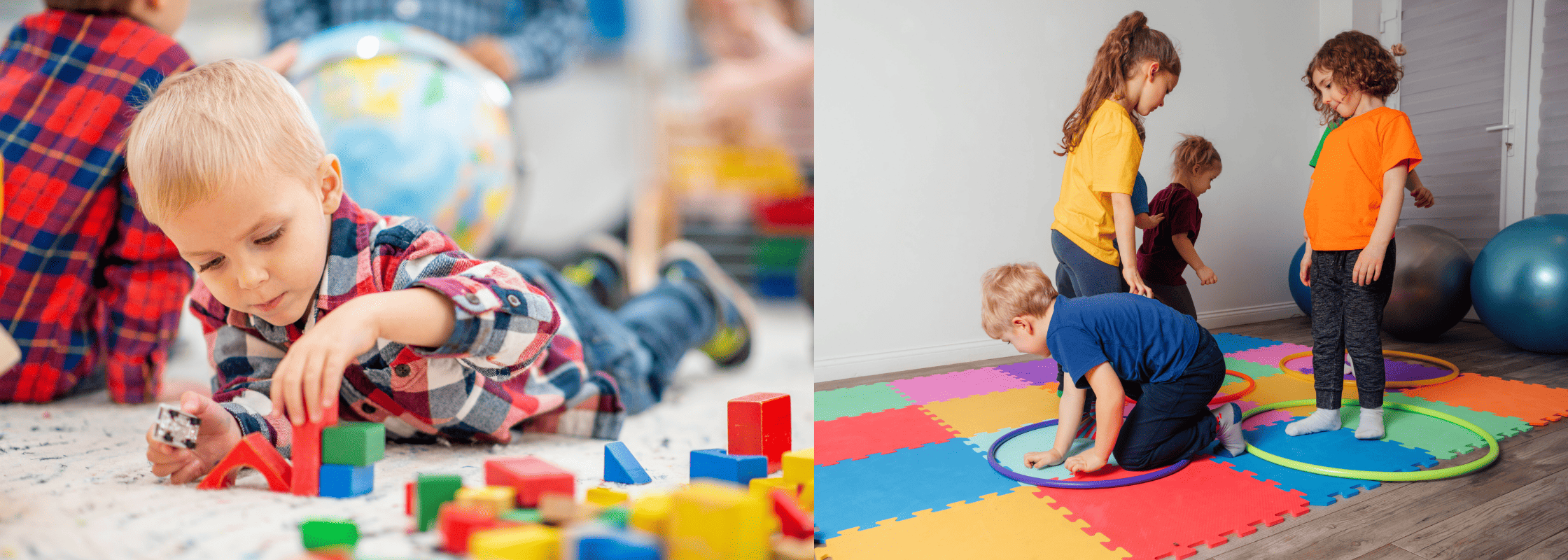
The Floor
Key stage one and early years children are very familiar with the floor. In many settings, the floor is a place for sitting up straight with crossed legs, but what happens when children are encouraged to lie on their tummies and engage in tasks this way? To start, lying on their fronts, holding up their heads and shoulders strengthens lower back muscles, which supports core development. Children working collaboratively, side by side will also need to cross the midline to pass materials to friends.
Children could draw or stick on large, textured paper such as sugar paper, using chunky markers. Encouraging them to select pictures (or small items for extra fine motor benefit) to cut and stick to their creations mean children will be required to move to hands and knees, building shoulder strength. Then reaching while balanced on three points again improves core development and stability. This could be a great way for children to access opportunities such as stringing together the story string lanterns in the Writing Root for Julia Donaldson’s The Magic Paintbrush. Having children physically thread the lanterns onto ribbon or string also supports fine motor development.
Easels and Walls
Vertical drawing, washing or painting on easels or walls strengthens shoulder muscles. Using chalk on a wall offers added resistance. Children could use sponges to wash painting or chalk from walls. If writing, walls offer added purpose for children to create posters, warning signs or billboards.
The Talking Trees activity from Little Red by Lynn Roberts could be taken into outdoor provision with children drawing the avenue of trees on a wall and writing their warnings to Little Red. For children needing extra support in this area, encourage them to stretch up a little higher and move their dominate hand off their midline thus reaching vertically and laterally. Look out for children struggling to cross the midline, who will need to move their whole bodies to write rather than moving arms across the body..png)
Music and Movement
There is no end to the benefits of incorporating music, rhythm and movement into daily life in the Early Years and beyond. We might automatically consider the ways in which this supports collaboration, language acquisition and phonological awareness but it can also be employed for physical development. Using ribbons, possibly attached to sticks, children can make large movements, crossing the midline. They could be encouraged to make letter shapes. Model reaching high, low and from side to side to put requirements on the core to aid stability.
Children could create stick ribbons themselves by tying ribbon or other textiles to sticks. The act of knot tying, though challenging for reception children, offers benefits for fine motor development and once mastered can be employed in numerous contexts including tying messages to trees, den building and of course tying shoelaces! .png)
Gardening
If a setting is lucky enough to have an area suitable for gardening, then this provides benefits beyond just the scope of physical development. If no such space exists, it’s always worth seeing if there are some helpful, green fingered parents who might be willing to create planters out of old tyres or pallets. Where health and safety permits, using full (child) sized tools such as spades and rakes is optimal for strengthening muscles, including the core and shoulder muscles, as well as twisting and resisting twisting through the trunk (a key element in balance and stability). The Writing Root for The Tiny Seed by Eric Carle offers opportunities for gardening, planting and handling seeds (extra fine motor practice).
.png)
Cooking, Baking and Making
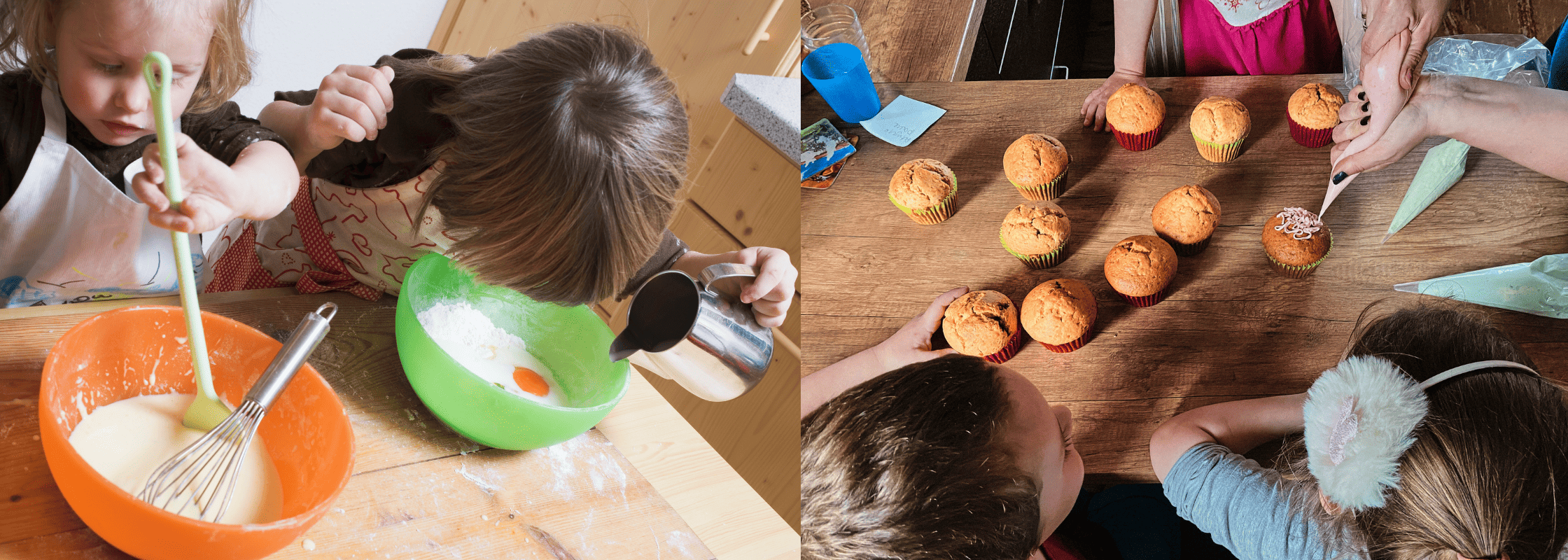
While not necessarily an activity that can take place daily, cooking is a great way to support physical development especially the muscles of the shoulders, arms and hands. For mixing, children will need to be able to rotate their forearms without moving the upper arm (essential skills for writing). An activity such as making cookies requires gross motor skills in standing and mixing as well as fine motor skills involved in pinching, rolling and shaping. Why not bake and decorate cakes or cookies for the family members that arrive in Trish Cooke’s So Much?
While the above activities present exciting and engaging opportunities for physical development, the most crucial consideration is individual children’s next steps. Some children may not be ready for the challenges involved with the activities. There may also be children with learning differences that create a barrier to these tasks. Practitioners are always the experts on making judgements about the level of adaptation required.
If you enjoyed this blog and you are a member, join us on 11th March for our Early Years Pedagogy Workshop with Pippa and Jess.